
So you're looking for a top Biaxial Warp Knitting Machine supplier in China? Well, it's not just about who gives you the lowest price. I mean, price matters, sure—but the right partner should really get fabric structure, production speed, how yarn behaves, and what maintenance looks like down the road. A dependable supplier can walk you through things like guide bars, let-off systems, tension control, and winding units—and explain how all that shapes the final fabric quality. At the end of the day, practical know-how is what counts.
When you’re looking at a machine, don’t just skim the spec sheet—dig into the details. Ask for fabric samples made with similar yarns and the same kind of production settings. Then check things like working width, gauge, output stability, electrical setup, and whether spare parts are actually available. A serious manufacturer should be able to hand over clear drawings, operating guidance, inspection records, and tech support that responds when you need it. Factory experience is definitely worth something, but proof of performance? That counts for more. And look—no single supplier is going to be a perfect fit for every factory.
Honestly, some purchasing decisions still lean way too much on glossy brochures. And yeah, that can be a real mistake. Before signing an order, buyers should get out there—visit the production facilities, check customer references, and actually talk through how installation will work. Video demos? They're helpful, sure, but they're no substitute for a real fabric trial. Even seasoned suppliers can run into limits, especially with unusual yarn blends or demanding reinforcement structures. That's something we should talk about openly.
So, this guide is all about figuring out how to size up a supplier of Biaxial Warp Knitting Machines based in China. We’ll look at things like their technical know-how, quality control, how flexible they are with customization, the service they offer, and—of course—the total cost of running their machines. But it’s not just the obvious stuff. We’ll also dig into the practical bits people often overlook: things like operator training, how long it takes to troubleshoot when something goes wrong, the quality of the components, and how well they communicate after the machine has been delivered. One thing to remember: the biggest supplier isn’t always the best one. It’s the one that actually backs up what it claims—again and again—and helps you hit your production goals with solutions you can measure and count on.

What Is a Biaxial Warp Knitting Machine?
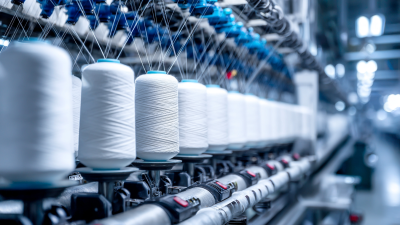
A biaxial warp knitting machine produces technical fabrics with yarns arranged in two main diagonal directions. These yarn layers usually cross at angles such as +45° and -45°. A warp-knitted stitch structure holds them together.
Unlike ordinary knitting equipment, this machine focuses on reinforcement and directional strength. It feeds yarns continuously from beams, guides them across the fabric width, and forms a stable knitted base. The result can be lightweight, strong, and suitable for composite reinforcement, filtration materials, geotextiles, and industrial fabrics.
Machine performance depends on yarn tension, laying angle, stitch density, and take-up speed. Even a small tension change can create wrinkles or uneven weight. In practical production, operators check the fabric edge, surface alignment, and roll hardness regularly. Experience matters here. A technical manual cannot predict every yarn’s behavior.
Tips: Confirm the required angle before production. Test a small roll first. Check both fabric faces under clear lighting. Record tension settings, speed, and defects. Some materials need slower operation, although this is easy to overlook. Choose equipment with accessible adjustment points and reliable safety controls. Ask for sample data, maintenance guidance, and operator training before making a purchase. A lower initial price may become expensive when calibration takes too long.
FCM Chopped Biaxial Warp Knitting Machine: Features, Applications, and Production Benefits
The FCM chopped biaxial warp knitting machine is designed for producing chopped strand mat and compound mat with consistent structure and efficient material distribution. With a working width of 2650 mm and an F7 gauge, it is suitable for continuous production where stable fabric formation and reliable dimensional control are important. Its one-bar configuration and eccentric pattern drive provide a straightforward knitting arrangement, helping operators adjust production according to different product requirements.
The machine operates at a speed range of 50–900 r/min, while the actual working speed depends on the material type, mat structure, and production conditions. This flexible speed range supports both quality-focused processing and higher-output operation. During production, chopped strands can be combined with other reinforcing materials to create mats for composite manufacturing, including applications in transportation components, construction panels, industrial products, and molded reinforcement materials.
By integrating chopping and biaxial warp knitting processes, the equipment can help reduce separate handling steps and improve production continuity. The resulting mats offer a practical basis for composite products that require reinforcement, uniform coverage, and manageable processing performance. Its configuration also allows manufacturers to select suitable operating parameters for different mat weights, resin systems, and downstream forming processes.

FAQS
It combines lengthwise and crosswise yarn systems. Guide bars control yarn movement, while needles form and lock the loops. Take-up rollers advance the fabric continuously. Stable sheets emerge.
Even tension helps maintain consistent openings and thickness. Uneven tension may create loose areas, distorted patterns, or visible bars. Check every guide bar before starting.
Operators may adjust needle timing, guide position, knitting speed, and take-up pressure. Yarn type and fabric requirements affect these settings. Calculations help, but they are not always perfect.
Check yarn tension and keep the guide path clean. Inspect needles, guides, and alignment carefully. A small error can spread across several meters.
Common uses include soil reinforcement, filtration, construction materials, automotive composites, sportswear, and medical textiles. Each application requires different machine settings and finishing compatibility.
A capable supplier should offer sample testing, process guidance, maintenance details, and defect records. They should test your yarn, coating, and downstream equipment. Promises alone are weak evidence.
Compare energy use, spare-part access, training, maintenance needs, and technical response time. A slower machine may provide steadier quality and simpler servicing. That trade-off deserves attention.
Usually not. The first sample may reveal tension changes, width problems, or alignment marks. Run a slower trial, inspect the first roll closely, and record the settings. Some practical adjustment remains unavoidable.
Conclusion
A Biaxial Warp Knitting Machine is designed to produce reinforced fabrics by integrating warp-knitted structures with yarns arranged in two intersecting directions. Its coordinated feeding, guide-bar movement, and high-speed knitting systems help create stable, strong, and lightweight materials. Chinese manufacturers commonly offer machines with precise electronic control, adjustable working widths, efficient production, and compatibility with various yarn types. These features make the equipment suitable for applications such as construction reinforcement, geotextiles, composite materials, transportation fabrics, packaging, and industrial textiles.
When evaluating a top Chinese supplier, buyers should consider machine performance, manufacturing consistency, technical expertise, customization options, delivery capability, and long-term service support. A reliable supplier should provide clear specifications, practical testing, installation guidance, operator training, spare parts availability, and responsive after-sales assistance. By comparing quality control procedures, production capacity, energy efficiency, and the ability to adapt equipment to specific fabric requirements, customers can select a dependable partner and achieve stable output, improved productivity, and sustainable value over the machine’s service life.
Related Posts
-

2026 Top Terry Warp Knitting Machine Types
-
How to Maximize Efficiency with Weft-Insertion Warp Knitting Machines in Textile Production
-

China Best Slide Needle Supplier How to Choose?
-

2026 Top Wire Mesh Fencing Machine Features and Innovations?
-

What Is the Best Wire Mesh Cutting Machine in 2026?
-

Top Geotextile Machine for Global Buyers in 2026?
