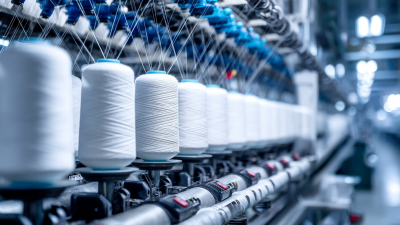
In the ever-changing world of textile manufacturing, choosing the right stitch bonding machine is pretty important if you want to boost productivity and keep quality high. I came across a report from The Textile Machinery Institute that says the global market for stitch bonding tech is expected to grow around 5.2% each year over the next five years. This really is due to the rising demand for lightweight yet strong materials used in both clothes and industrial stuff. Honestly, this just goes to show how crucial it is to make smart choices when you're picking out your stitching equipment.
Dr. Michael Harrison, a real expert in this field, who’s been digging into new textile machinery, points out that “getting the right stitch bonding machine isn’t just about efficiency—it really opens up more options for what you can do with your products.” As companies try to meet all kinds of customer needs these days, investing in the right machine could honestly be a total game changer. It can help you stand out from the crowd in a pretty competitive market.
So, it’s super important to get a good grip on the different types of stitch bonding machines out there and what they can do. By thinking about your specific needs, how much you’re planning to produce, and the types of materials you’re working with, you can make smarter investments. That way, you’ll be able to keep pushing for innovation and growth, which should help improve your product quality—and keep your customers happy.
Stitch bonding machines play a crucial role in various industries, particularly in textiles, where they serve as an efficient alternative to traditional sewing methods. These machines utilize a unique process that involves the fusion of synthetic fibers through heat and pressure, forming a robust bond without the need for threads. According to a recent report by Smithers Pira, the global stitch bonding market is projected to reach approximately $1.6 billion by 2025, reflecting a growing demand in sectors such as automotive, apparel, and home textiles.
Understanding the components of stitch bonding machines is foundational for selecting the right model for your needs. Key features to consider include the machine's bonding capacity, the type of materials it can handle, and the type of bonding techniques available—such as ultrasonic, thermal, and chemical bonding. Research indicates that machines equipped with advanced control systems improve efficiency, reduce material waste, and enhance overall productivity by as much as 20%. Thus, having a clear understanding of your production requirements can significantly influence your choice of a stitch bonding machine, leading to better operational outcomes and cost-effectiveness.
When it comes to selecting the best stitch bonding machine for your needs, understanding the types available on the market is crucial. Stitch bonding machines primarily fall into several categories, including continuous and batch systems. Continuous stitch bonding machines are designed for mass production, allowing for the swift processing of large quantities of fabric, whereas batch systems are better suited for smaller scale operations or specialized projects. Each type offers unique benefits depending on the volume and flexibility required for your production needs.
Another important classification is based on the bonding mechanism. Some machines utilize needle and thread to bond materials, while others rely on heat or adhesives. The choice between these mechanisms can significantly impact the quality and properties of the final product, making it essential to consider your specific application when making a decision.
**Tips:** Before purchasing, assess your production volume and fabric types. If you're working with high volumes of fabric, a continuous machine might be your best bet. For smaller, diverse projects, look into batch systems for their versatility. Always consider maintenance and support as well; investing in a machine that’s easy to maintain can save time and costs in the long run.
When selecting the best stitch bonding machine for your needs, there are several key features to take into account that can significantly impact your production efficiency and product quality. One of the foremost considerations is the machine's speed and throughput capabilities. According to a recent industry report by Grand View Research, the demand for stitch bonding technology is projected to grow at a CAGR of 5.2% from 2021 to 2028, driven largely by the textile and automotive sectors, which emphasize high-speed production. Machines capable of operating at higher speeds can enhance your productivity by reducing lead times, making it essential to choose a machine that aligns with your production requirements.
Another crucial factor is the versatility and adaptability of the stitch bonding machine. The ability to process a variety of materials—from nonwovens to woven fabrics—can make a significant difference in your operational flexibility. As noted by Technavio's market analysis, over 35% of manufacturers view the adaptability of equipment as a critical determinant in their purchasing decisions. This feature not only allows businesses to diversify their product offerings but also to respond to market trends and customer preferences more swiftly. Additionally, consider the ease of maintenance and user-friendly interfaces, as these attributes can minimize downtime and save costs associated with training and repairs.
| Features | Description | Importance Level |
|---|---|---|
| Sewing Speed | The speed at which the machine can stitch fabric, measured in stitches per minute (SPM). | High |
| Needle Type | Compatibility with different needle types based on the fabric requirements. | Medium |
| Stitch Types | Variety of stitch patterns that the machine can produce, such as straight, zigzag, and decorative stitches. | High |
| User Interface | Ease of use, including the presence of a digital screen and intuitive controls. | High |
| Durability | Quality of materials used in machine construction, impacting its overall lifespan. | High |
| Maintenance Requirements | Frequency and type of maintenance needed to keep the machine in optimal working condition. | Medium |
When selecting a stitch bonding machine, assessing production capacity and efficiency requirements is paramount to meeting operational goals. According to industry reports, the demand for stitch bonding technology has grown steadily at an annual rate of approximately 6.5% over the past five years, indicating a strong market presence and the need for manufacturers to optimize production efficiency. A key consideration in choosing a machine is the maximum output rate, often measured in meters per hour. Machines that can produce between 200 to 600 meters per hour are commonly favored for high-demand environments, ensuring quicker turnaround times while maintaining quality.
Moreover, efficiency is not solely about speed; it also involves minimizing waste and energy consumption. Recent studies reveal that modern stitch bonding machines equipped with advanced automation and smart technology can reduce material waste by up to 25%. This not only contributes to lower operational costs but also enhances sustainability, making it essential for manufacturers to evaluate the eco-efficiency of machinery during the selection process. It is vital to consider how different models align with specific production goals—whether it be a small-scale operation requiring enhanced flexibility or a large-scale facility prioritizing consistent high-volume output.
When choosing the right stitch bonding machine, evaluating fabric compatibility and machine versatility is essential for optimizing production efficiency. Different fabrics, ranging from non-woven to woven textiles, necessitate distinct types of bonding processes. According to industry reports, the global stitch bonding market is expected to grow at a CAGR of 5.2% from 2020 to 2027, highlighting the increasing demand for machines that can handle various fabric types. A versatile machine will not only accommodate multiple fabric types but will also provide adjustable settings to cater to specific bonding needs, ensuring high-quality output.
Tip: Before investing in a machine, create a checklist of the types of fabrics you intend to work with and their particular bonding requirements. This will help you identify machines that not only handle those fabrics but also offer the flexibility to adapt to future projects.
Moreover, the ability to quickly switch between different bonding techniques can greatly enhance productivity. Data from recent manufacturing studies indicates that companies utilizing versatile stitch bonding machines report a 30% increase in operational efficiency. Look for machines with features such as adjustable speed settings and varying needle options to ensure they can meet the demands of your diverse fabric inventory.
Tip: Consider machines equipped with intuitive interfaces or automated features that simplify adjustments. This will reduce downtime during production changes and enable you to maximize the output across various fabric types.
When considering the purchase of a stitch bonding machine, budget plays a crucial role in determining the right fit for your operational needs. The initial investment for these machines typically ranges from $10,000 to over $100,000 depending on features and capacity. According to a recent industry report by Technavio, the global stitch bonding market is projected to experience a compound annual growth rate (CAGR) of around 5% through 2025, highlighting an increasing demand for these versatile machines. This growth is largely driven by the textile sector, where stitch bonding offers advantages such as reduced production costs and improved material durability.
In addition to the purchase price, it’s vital to account for operational and maintenance costs when budgeting for a stitch bonding machine. Maintenance costs can add anywhere from 10% to 15% of the initial purchase price annually, according to industry experts. Additionally, training personnel to operate these machines efficiently can incur extra costs, which should be factored into your overall budget. Notably, investing in a higher-quality machine may yield better long-term savings through improved productivity and reduced downtime, thus enhancing the return on investment. As stitch bonding technology continues to advance, balancing upfront costs with long-term benefits will be essential for maximizing your equipment’s performance.
When selecting a stitch bonding machine, the reputation of the manufacturer plays a crucial role in ensuring a wise investment. A well-established manufacturer is typically a sign of quality, reliability, and trustworthiness. Researching industry reviews, testimonials, and success stories can provide insights into a manufacturer’s standing in the market. Engaging with online forums or attending trade shows can also highlight manufacturers that prioritize innovation and quality, allowing potential buyers to make informed choices based on collective experiences and recommendations.
Customer support services are equally important when choosing a stitch bonding machine. Reliable after-sales support can greatly impact the long-term functionality of your equipment. It is advisable to consider manufacturers that offer comprehensive assistance, including installation, troubleshooting, and regular maintenance checks. A responsive customer support team can significantly ease the learning curve associated with new machinery, ensuring that any issues are promptly addressed and minimizing downtime. Investing in a machine from a manufacturer that values customer service will provide peace of mind and facilitate a smoother operational experience.
The FC(ll) Chopped Stitch Bonding Machine is at the forefront of modern fabric manufacturing, bringing a revolutionary approach to seamless bonding in production lines. This sophisticated machinery is specifically designed for the production of chopped strand mat and compound mat, which are essential components in various sectors, including automotive, construction, and consumer goods. By integrating high-speed capabilities, the machine operates efficiently at speeds ranging from 50 to 1300 revolutions per minute, allowing for flexible production tailored to specific product requirements.
One of the defining specifications of the FC(ll) machine is its impressive width of 116 inches, coupled with a single-bar setup for optimized material handling. The innovative pattern drive system utilizing pattern discs enhances the consistency and quality of the bonding process. The robust design includes a warp beam support system featuring three supports, thereby ensuring stability and precision during operation. Industry reports indicate that adopting such advanced bonding technologies can improve production efficiency by up to 30%, enabling manufacturers to meet the increasing demand for high-performance materials with reduced lead times.
The impact of the FC(ll) Chopped Stitch Bonding Machine on modern fabric manufacturing cannot be overstated. As manufacturers strive to enhance their processes and adapt to evolving consumer demands, the ability to produce versatile, durable, and lightweight materials becomes paramount. This machine not only meets those requirements but also paves the way for innovative applications that could redefine material use across multiple industries, setting new benchmarks for quality and performance.
: The main types of stitch bonding machines include continuous systems, which are designed for mass production, and batch systems, which are better suited for smaller scale operations or specialized projects.
Continuous stitch bonding machines allow for the swift processing of large quantities of fabric, making them ideal for high-volume production needs.
Batch systems are more versatile and suited for smaller, diverse projects, while continuous machines are focused on high-volume production.
Stitch bonding machines may use needle and thread, heat, or adhesives as bonding mechanisms, each affecting the quality and properties of the final product.
Production capacity should consider the maximum output rate, typically measured in meters per hour, and whether it aligns with the operational goals of the project.
Modern stitch bonding machines can minimize waste and energy consumption, with some models reducing material waste by up to 25%, contributing to lower operational costs and enhanced sustainability.
Investing in a machine that is easy to maintain can save time and costs in the long run, making it an important factor in the selection process.
High production volumes may warrant the use of continuous machines for efficiency, while smaller projects might benefit from the flexibility of batch systems.
Evaluating eco-efficiency is vital as it impacts operational costs and sustainability, making it essential for manufacturers aiming to optimize their machinery selection.
The demand for stitch bonding technology has grown steadily at an annual rate of approximately 6.5% over the past five years, indicating a strong market presence.
When selecting the best Stitch Bonding Machine for your needs, it's essential to understand the various types available on the market and their key features. Start by assessing the production capacity and efficiency requirements specific to your operations, as these factors will significantly influence your choice. Consider the compatibility of the machine with different fabrics and its overall versatility to ensure it meets your project demands.
Budget considerations also play a vital role in the decision-making process. It's important to find a machine that fits within your financial plan while still delivering the necessary quality and performance. Additionally, researching manufacturer reputation and the level of customer support provided can further aid in making an informed decision. By carefully evaluating these aspects, you can choose a Stitch Bonding Machine that best aligns with your operational needs and production goals.